Matcha vs Green Tea: Same Plant, Completely Different Drink
So, what is matcha green tea made of, and how is it different from the green tea in your cup? Both come from the same plant, Camellia sinensis. Matcha is a green tea, but understanding the difference between matcha in green tea terms and what the rest of the world calls green tea starts with how each is grown and processed. Matcha is shade-grown, hand-picked from the first harvest, and stone-ground into a fine powder you dissolve entirely in water. Regular green tea is sun-grown, dried, steeped, and the leaves are thrown away. That single difference, consuming the whole leaf vs an infusion, changes everything: the taste, the nutrition, the caffeine, and how your body responds. Same origin story. Different drinks.
📋 Key Facts: Matcha vs Green Tea
- Both drinks come from the same plant — Camellia sinensis — but are processed completely differently
- Matcha contains roughly 9× more EGCG antioxidants per gram than brewed green tea and up to 137 more that China green tea (Weiss & Anderton, Journal of Chromatography, 2003)
- A 1-tsp matcha (2g) serving has ~60 mg caffeine vs 28–30 mg in a cup of brewed green tea
- Matcha's L-theanine content is 3–4× higher than brewed green tea, producing calmer, longer-lasting energy
- Green tea is steeped and the leaves discarded; matcha is the whole leaf, ground to powder and consumed entirely
- Ceremonial grade matcha has the highest L-theanine content due to shade-growing; culinary grade suits cooking
Is Matcha Green Tea? Yes, But the Processing Is What Changes Everything
Matcha is a type of green tea in the same way champagne is a type of sparkling wine. Technically the same category; practically a different product entirely. Both matcha and regular green tea come from Camellia sinensis, the same tea plant species. What makes them different is everything that happens before the drink reaches your cup.
Regular green tea is grown in full sunlight. After harvest, the leaves are steamed or pan-fired to stop oxidation, then dried. To make a cup, you steep those dried leaves in hot water for 2–3 minutes, then remove them. You extract a portion of the leaf's compounds into water and discard the rest.
Matcha starts with a different growing method entirely. The plants are shade-covered for 3–4 weeks before harvest, blocking up to 90% of sunlight. This forces the plant to produce more chlorophyll and L-theanine (an amino acid) to compensate for reduced photosynthesis. After harvest, the stems and veins are removed, leaving only the tender leaf meat (called tencha). Those tencha leaves are then stone-ground, slowly, at low heat, into a fine bright-green powder.
When you make matcha, you whisk that powder directly into water. Nothing is removed or discarded. You consume the whole leaf. That's the core difference between matcha and green tea — and it's why they deliver such different results.
Taste Comparison: Umami vs Grassy, What Each Actually Tastes Like
The taste difference between matcha and green tea is real, and it's significant. Getting this wrong is one of the most common reasons people write off matcha after a bad first experience.
Matcha flavour: Good ceremonial matcha is naturally sweet with a deep umami note, the same savoury richness you'd find in a good miso soup or dashi broth. There's a mild vegetal quality, but no harshness. The sweetness comes from the high L-theanine content, which the shade-growing process is specifically designed to maximise. Bitterness in matcha is a sign of lower grade powder, poor preparation, or water that's too hot (over 80°C strips the sweetness).
Green tea flavour: Light, grassy, sometimes floral. The taste is more delicate and varies a lot by variety, a Japanese sencha tastes quite different from a Chinese longjing. Most brewed green teas have a fresh, slightly vegetal quality without strong bitterness if steeped correctly. But they don't have the depth or sweetness of high-quality matcha.
The bottom line on taste: when it comes to matcha green tea vs green tea flavour, matcha wins for richness by a wide margin. If you want something lighter and want to drink 4–5 cups throughout the day, green tea's lower intensity suits that pattern better. Neither is objectively better, it depends what you're after.
Nutrition Comparison: Why Matcha Has More Antioxidants Than Green Tea
In 2003, Weiss and Anderton published an analysis in the Journal of Chromatography A measuring EGCG, the primary catechin antioxidant in tea, across different preparations. Matcha contained approximately 137 mg of EGCG per gram of powder. Brewed green tea contained around 15 mg per 8 oz cup. That's a roughly nine-fold difference, and the reason is simple: whole-leaf consumption versus infusion. Using a mg catechin / g of dry leaf comparison, results indicate that the concentration of epigallocatechin gallate (EGCG) available from drinking matcha is 137 times greater than the amount of EGCG available from China Green Tips green tea, and at least three times higher than the largest literature value for other green teas.
When you brew green tea, you extract maybe 20–30% of the leaf's compounds into the water. The rest, including most of the fibre, chlorophyll, and fat-soluble antioxidants — stays in the leaf you throw away. With matcha, you consume the whole thing. Every compound in that leaf goes into your body.
This matters most for EGCG specifically. EGCG is the catechin most studied for its anti-inflammatory properties, and it's concentrated in the leaf tissue. Brewed tea gets some of it. Matcha gets nearly all of it.
EGCG Antioxidant Content — Matcha vs Brewed Green Tea
Chlorophyll is the other standout. The shade-growing process dramatically increases chlorophyll production in matcha leaves, which is why high-quality ceremonial matcha is such a vivid, almost electric green. Brewed green tea, with its leaves discarded, delivers very little chlorophyll by comparison.
If you want more on what matcha's antioxidant load actually does for the body, our overview of matcha's caffeine explained and its health benefits covers the research in detail.
Caffeine and L-Theanine: Side-by-Side Numbers
Both matcha and green tea are caffeinated. The difference is the amount — and the ratio of caffeine to L-theanine, which determines how that caffeine feels in your body.
A standard 1-tsp (2 g) matcha serving contains ~60 mg of caffeine. An 8 oz cup of brewed green tea contains 28–30 mg. So matcha delivers roughly twice the caffeine per serving. But the more interesting number is L-theanine. A 2008 trial published in Nutritional Neuroscience demonstrated that L-theanine and caffeine in combination improve sustained attention more than either compound alone, and matcha has a much higher L-theanine-to-caffeine ratio than any brewed tea.
| Compound | Matcha (1 tsp / 2 g) | Green Tea (8 oz brewed) |
|---|---|---|
| Caffeine | ~60 mg | 28–30 mg |
| L-Theanine | ~30 mg | ~8 mg |
| EGCG (antioxidants) | ~137 mg/g | ~15 mg/8 oz |
| Chlorophyll | Very high (shade-grown) | Low (partially extracted) |
| Whole leaf consumed | ✓ Yes | ✗ No, leaves discarded |
| Typical energy effect | Calm, focused, sustained | Mild, gentle lift |
Sources: USDA FoodData Central; Weiss & Anderton (2003); Kochman et al., Nutrients (2021); Bryan (2008), Nutritional Neuroscience.
That caffeine–L-theanine pairing is why matcha drinkers consistently describe the effect as "focused but calm", not wired. It's also why matcha is frequently described as clean energy without the crash that coffee creates. Learn more about the mechanics in our full guide to matcha caffeine.
Green Tea vs Matcha: Which One Should You Actually Choose?
The right answer depends entirely on what you're trying to do. Both are genuinely good for you. But they serve different purposes, and knowing which suits your needs saves you a bad first experience with either.
| Use Case | Matcha | Green Tea |
|---|---|---|
| Morning energy & focus | ★ Best choice | Good, but gentler |
| Maximum antioxidant intake | ★ Best choice | Moderate |
| Cooking, baking & recipes | ★ Yes — versatile | ✗ Not suitable |
| High daily volume (4–6 cups) | 1–3 servings recommended | ★ Better for volume |
| Budget-friendly daily habit | Higher cost per serving | ★ Lower cost |
| Rich, complex flavour | ★ Umami, naturally sweet | Light, grassy, delicate |
If you're replacing your morning coffee and want something with real focus and a smooth ride, matcha is the clear choice. The Premium Ceremonial Matcha is where to start, first harvest, shade-grown, significantly better L-theanine content than culinary grade. If you want to understand matcha caffeine content vs coffee in more detail, that breakdown covers it.
If you're after a light daily drink you can have 4–5 times a day without worrying too much about caffeine, quality loose-leaf green tea does that job well. The antioxidant payoff is lower, but it's still a genuinely healthy choice and much cheaper per serving.
Try the Difference for Yourself
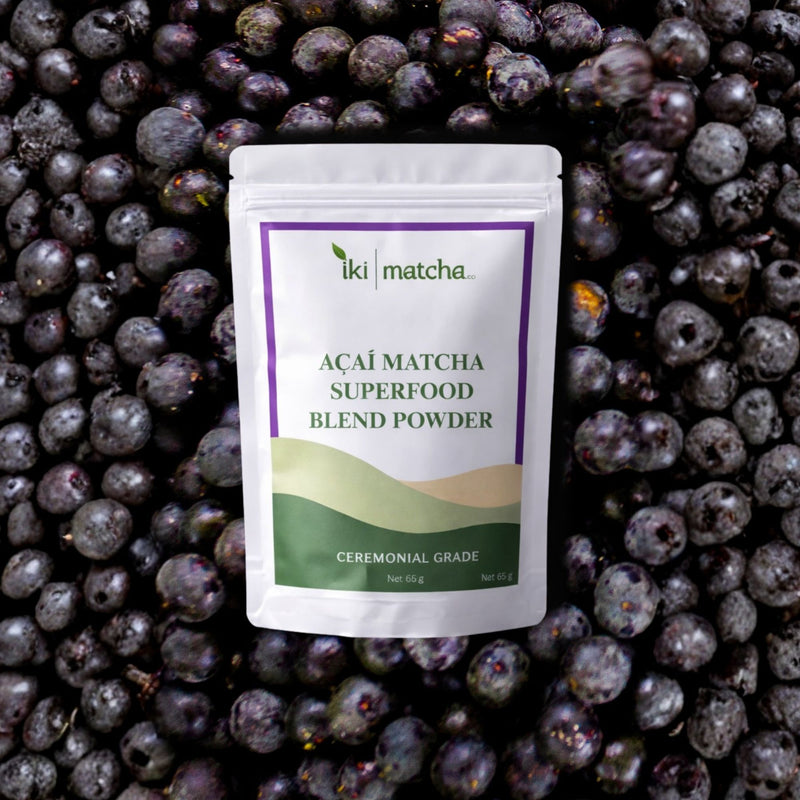
Our Premium Ceremonial Matcha is shade-grown, first-harvest, and stone-ground in Japan. High L-theanine, vivid colour, genuinely sweet flavour. No bitterness, no crash.
Shop Ceremonial Matcha Powder →
Frequently Asked Questions
Is matcha the same as green tea?
No, but they come from the same plant. Both matcha and green tea are made from Camellia sinensis leaves, which is why matcha is technically a type of green tea. But the similarity stops there. Matcha is shade-grown, first-harvest, stone-ground into a powder you consume whole. Regular green tea is sun-grown, dried, steeped, and discarded. Different growing conditions, different processing, different nutritional profile, different taste.
What is matcha green tea made of, exactly?
Matcha is made from the leaves of shade-grown Camellia sinensis plants, specifically tencha leaves from the first harvest of the season. After 3–4 weeks of shade-covering, the leaves are picked, steamed, dried, destemmed (removing veins and stems), and then stone-ground very slowly into a fine, bright-green powder. That powder is whisked into hot water and consumed entirely, nothing is discarded.
Does matcha have more antioxidants than green tea?
Yes, significantly more. Research published in the Journal of Chromatography A (2003) found that matcha contains approximately 137 mg of EGCG per gram, versus around 15 mg per 8 oz cup of brewed green tea. That's roughly 9 times more. The reason is straightforward: you consume the entire ground leaf with matcha, rather than just a water extraction of a portion of the leaf's compounds.
Is matcha stronger than green tea for energy?
In caffeine terms, yes, matcha has about twice the caffeine of brewed green tea (64–70 mg vs 28–30 mg per standard serving). But more importantly, matcha has 3–4× more L-theanine. That amino acid pairs with caffeine to create a calmer, more sustained focus, without the jitteriness or crash you can get from coffee. Most people describe matcha energy as noticeably smoother than green tea or coffee.
Which has more caffeine — matcha or green tea?
Matcha has more caffeine per serving. A 1-tsp (2 g) matcha serving contains roughly 64–70 mg. An 8 oz cup of brewed green tea contains 28–30 mg. If you want to know how much caffeine is in matcha compared to coffee and espresso, we've broken that down in detail — including why matcha caffeine feels different from either.
The Takeaway
Matcha and green tea start from the same leaf. The difference is in the shade growing, the stone-grinding, and most importantly, the fact that you consume the whole leaf with matcha rather than just water it's been steeped through. That single change gives matcha roughly 9 times more antioxidants per gram, twice the caffeine, and significantly more L-theanine than brewed green tea.
Which you choose comes down to what you want: focused, flavour-forward energy in 1–2 servings, or a light, volume-friendly drink you can have throughout the day. For the beginner's take on making the switch, the matcha for beginners guide is a good starting point. And if you've already made up your mind, the ceremonial grade is where the real experience is.