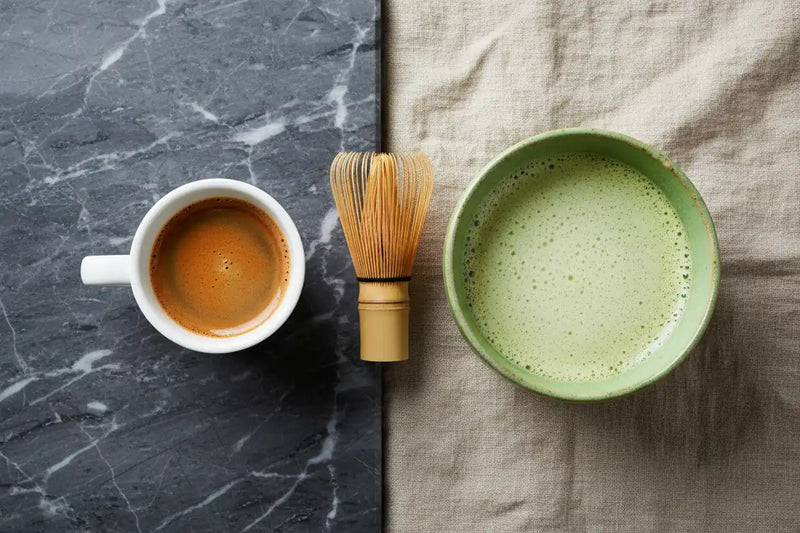
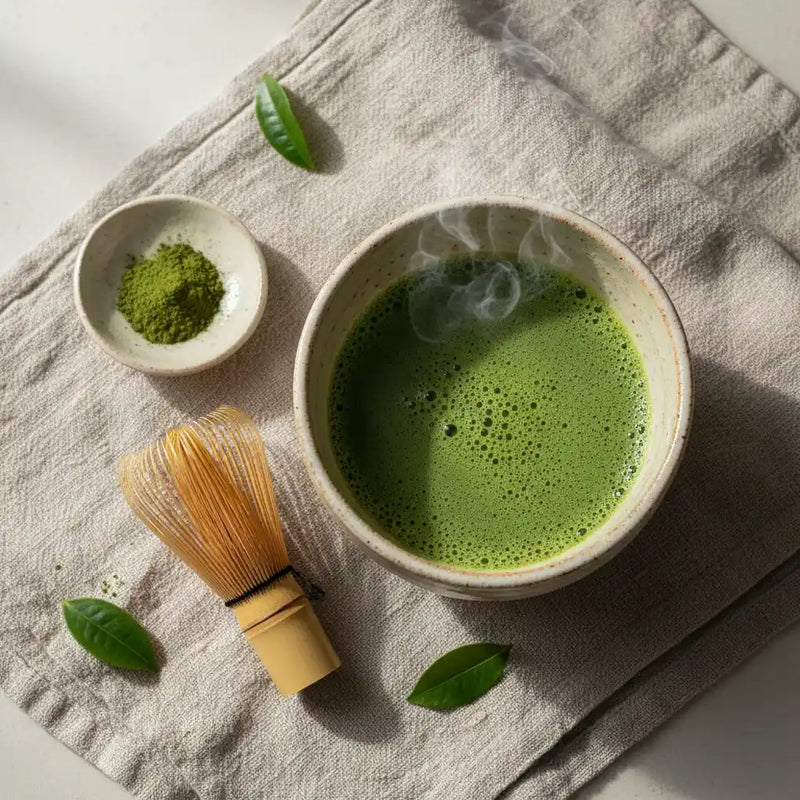
Matcha green tea with a whisk, bowl of matcha powder, and mint leaves on a white background

How to Make Matcha at Home

A simple step-by-step guide to making ceremonial matcha at home.

Learn how to prepare matcha the traditional way — whisking technique, water temperature, and the right matcha to water ratio for café-quality matcha at home.

Matcha is not simply a drink.
It is a moment of stillness, focus, and intention.

HISTORY OF MATCHA

A serene, painterly image of a Zen Buddhist monk in traditional robes, carefully preparing matcha in a rustic Japanese tea room. Sunlight streams through a shoji screen. Style of a classic Japanese woodblock print, but with realistic detail and soft lighting.

The Ancient Art of Matcha Tea

Matcha isn't just a trend. Its history dates back nearly a thousand years, to a time when dynasties ruled China and Shogun clans ruled Japan. The origins of matcha tea trace all the way back to the Tang Dynasty in China (7th–10th centuries), and in 1191 it was brought from China to Japan by a Buddhist monk.

Learn the origins of matcha

Build Your Ritual

How to Make Matcha in 4 Steps

You're only four steps away from the perfect cup. It takes just 60 seconds, and that's the point.

Hand reaching for a glass bowl with a bottle, sieve, and spoon on a beige surface.

STEP 1

GATHER

Bring yourself into the present moment and gather everything you need to make matcha: water heated to 80°C, matcha powder, whisking bowl, sifter, scoop, and bamboo whisk.

Person preparing tea with a whisk and a bowl on a beige background

STEP 2

SIFT

Using your scoop, place one scoop (~2 g) of matcha powder into your sifter over the whisking bowl. Push the matcha through the sifter with the scoop, then add 60 ml of 80°C water into the bowl atop the sifted matcha powder.

Person preparing matcha with a whisk and bowl on a beige background

STEP 3

WHISK

With your bamboo whisk, briskly whisk for 15–20 seconds. Move the whisk in a "W" or "M" motion to create froth. Keep whisking until the matcha is fully mixed into the water and no clumps remains – you should see a fine, creamy layer of froth on top.

Person pouring green liquid into a glass mug with a whisk and towel on a beige background

STEP 4

POUR

For a traditional bowl, drink as-is or add 60–120ml of hot water to taste. For a matcha latte, top with 180ml of warm or cold milk.

Measurements

Matcha to Water Ratio

Getting the ratio right matters more than technique. Too much water and the flavour thins out; too little and you're drinking paste. Use the table below as a starting point, then adjust to taste.

Drink Matcha Hot Water Milk / Other Notes
Traditional (usucha) 2 g
≈ 1 tsp
60 ml
70–80 °C
The standard thin-style bowl. Whisk until frothy.
Thick (koicha) 4 g
≈ 2 tsp
30 ml
70–80 °C
Kneaded, not whisked. Use ceremonial grade only.
Hot latte 2 g
≈ 1 tsp
30 ml
70–80 °C
180 ml steamed milk Dissolve the matcha in the water first, then add milk.
Iced latte 3 g
≈ 1½ tsp
30 ml
70–80 °C
Ice + 150 ml cold milk Extra powder compensates for ice dilution.
Smoothie 3–4 g
1½–2 tsp
Blended with liquid of choice Sift into the blender to avoid clumps in cold liquid.

Tip: Measure by weight if you can. A kitchen scale removes the guesswork — matcha is light and fluffy, so "one teaspoon" can vary quite a bit.

No Whisk, No Problem

How to Make Matcha Without a Whisk

A bamboo chasen gives the best results, but it isn't the only way to make a smooth cup. If you don't have one yet — or you're travelling — these three methods will get you close.

1

Electric milk frother

Sift your matcha into a mug with 60 ml of hot water. Submerge the frother head and run it for 15–20 seconds. You'll get a decent foam layer, though the bubbles will be slightly larger than a chasen produces. The fastest no-whisk method and the one most people stick with.

2

Shaker bottle or jar

Add matcha and water to a leak-proof bottle and shake hard for 30 seconds. Well-mixed and lump-free, but no real foam — the texture is closer to a matcha shot. Great for iced matcha: add ice and cold milk to the same bottle and shake again.

3

Fork and small bowl

Sift the matcha into a small bowl. Add a tablespoon of hot water and press it into a paste with the back of a fork, then gradually add the remaining water while whisking quickly. Smooth, but no foam layer — the most accessible method for beginners.

All three work. But if you're making matcha most mornings, a bamboo whisk (chasen) is still the tool for the finest micro-foam — and it turns the whole process into something you look forward to.

Troubleshooting

Common Matcha Mistakes

Even good matcha can taste off if one small step goes wrong. Here are the issues people run into most often — and what to do about each one.

Bitter matcha

The usual cause is water that's too hot. Boiling water scorches the amino acids that give matcha its sweetness. Let your kettle cool to 70–80 °C — about two minutes off the boil. The other possibility: you're using culinary-grade powder for drinking. Culinary grade is built for baking. For whisked matcha, you need ceremonial or premium grade.

Clumpy matcha

Matcha clumps when it meets liquid without being sifted. Push your powder through a fine-mesh sieve before it touches water. Ten seconds, problem solved.

No froth

Your bowl might be too wide — a matcha bowl (chawan) with curved sides concentrates the whisking action and builds foam faster. Also check your dose: below 1½ grams there isn't enough body in the liquid to hold air.

Dull or yellowish colour

If your matcha looks olive or faded, it has oxidised. Once opened, store it in an airtight canister in the fridge and finish it within four to six weeks.

Matcha settling in iced drinks

Cold liquid can't dissolve matcha on its own. Always whisk the powder into a small amount of hot water first — even 30 ml — before pouring over ice or cold milk. Skip this and the powder sinks every time.

Recipe

How to Make a Matcha Latte at Home

Enjoy calm focus and sustained energy with a refreshing iced matcha.

Ingredients

• 3g Ceremonial Matcha
• 30ml hot water
• Ice
• 150ml milk

To make:

  1. 1

    Whisk the matcha

    Add matcha and hot water to a small bowl and whisk until smooth and frothy.

  2. 2

    Prepare the glass

    Fill a glass with plenty of ice.

  3. 3

    Pour over ice

    Pour the whisked matcha over the ice.

  4. 4

    Add your milk

    Top with your favourite milk and gently stir.

matcha green tea

Frequently Asked Questions

Find answers to common questions about how to make matcha at home

  • The ideal water temperature for matcha is 75–80°C. Boiling water scorches the delicate tea leaves and makes matcha taste bitter. Let freshly boiled water cool for 2–3 minutes, or stop your kettle before it reaches a full boil. At around 80°C, matcha develops its naturally smooth, umami-rich flavour.

  • Use one scoop, approximately 1–1.5 teaspoons (about 2 grams), whisked with 60 ml of water. For a milder cup, add more water after whisking. For a stronger, richer bowl of matcha, use two scoops.

  • Yes. A small electric milk frother or a tightly sealed shaker bottle both work well for mixing matcha. A traditional bamboo whisk (chasen) produces the smoothest texture and finest froth, but you can still make an excellent cup without one.

  • Clumps usually mean the matcha wasn't sifted before whisking. Always sift the powder first for a smoother drink. Bitterness is commonly caused by using water that's too hot or by using a lower-grade matcha. Ceremonial-grade matcha whisked with 75–80°C water should taste smooth, mellow, and slightly sweet.

  • Whisk 1–2 teaspoons of matcha with 60 ml of 75–80°C water until smooth and frothy. Pour over 180 ml of warm or cold milk. Oat milk and almond milk pair particularly well with matcha. Sweeten with honey or maple syrup if desired.

Start Your Matcha Journey

Buy ethically sourced, premium organic matcha powder.

The tools you need to make matcha at home.