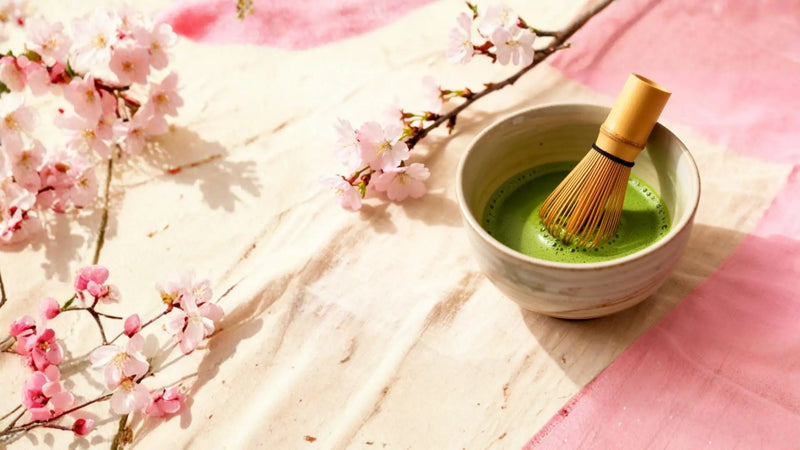


Ceremonial matcha and culinary matcha are two distinct grades of Japanese green tea powder, separated by harvest timing, leaf selection, processing method, flavour, and intended use. Ceremonial grade uses only the youngest first-harvest leaves, stone-ground into an ultra-fine powder designed for drinking straight. Culinary grade draws from later harvests and is built for cooking, baking, and blending into other ingredients.
That one-paragraph answer covers the basics. But whether you're searching culinary vs ceremonial or trying to work out the best matcha grade for your morning routine, the real decision comes down to how you plan to use it. Here's everything worth knowing — without the fluff.
Key Facts: Ceremonial vs Culinary Matcha
- Ceremonial matcha comes exclusively from the first spring harvest (ichibancha), picked late April to May. Culinary uses second or third harvests.
- First-harvest shade-grown leaves contain significantly more L-theanine — the amino acid linked to calm, focused energy (Molecular Psychiatry, 2026).
- A standard 2g matcha serve contains 60–70 mg of caffeine, within the 400 mg/day safe limit set by FSANZ and the FDA.
- "Ceremonial" and "culinary" are industry labels, not regulated grades. Quality varies widely within each category — provenance matters more than the label.
- Matcha delivers up to 3× more EGCG (the key antioxidant catechin) than other high-quality green teas (Weiss & Anderton, Journal of Chromatography A, 2003).
What Actually Separates Ceremonial From Culinary Matcha?
The difference starts in the field. Ceremonial-grade tea plants spend three to four weeks under shade cloth before harvest, which forces the plant to produce more chlorophyll and more L-theanine. Then there's harvest timing — ceremonial uses only the first spring flush (late April to May), the youngest, sweetest, most nutrient-dense leaves. Culinary matcha pulls from later harvests. Those leaves are tougher, more bitter, and contain less L-theanine.
After harvest, ceremonial-grade leaves are steamed, dried, de-stemmed and de-veined, then stone-ground on granite mills at roughly 30–40 grams per hour. The slowness preserves colour, flavour, and nutrients. Some culinary matcha is stone-ground too, but cheaper versions use industrial mills that run faster and hotter.
All our ceremonial matcha at Iki Matcha Co is first-harvest, shade-grown, single-cultivar, and stone-ground from a family farm in Kagoshima, Japan. We're specific about this because the details actually matter to what ends up in your cup.
Ceremonial vs Culinary Matcha: Side-by-Side Comparison
| Feature | Ceremonial Grade | Culinary Grade |
|---|---|---|
| Harvest | First flush only (April–May) | Second, third, or autumn flush |
| Leaf Selection | Youngest tips, stems and veins removed | More mature leaves, broader selection |
| Shade Growing | 3–4 weeks minimum (~90% cover) | Often shorter or less strict |
| Processing | Traditional slow stone grinding | Stone or industrial grinding |
| Particle Size | Ultra-fine (under 10 microns) | Coarser, varies by producer |
| Colour | Vivid, jewel-toned green | Duller green, often yellow-green |
| Flavour | Sweet, umami, smooth, no bitterness | Robust, earthy, noticeably bitter |
| L-Theanine | Higher (the first harvest is richest) | Lower |
| EGCG Antioxidants | High | Moderate to high (more sun = more catechins) |
| Caffeine (per 2g) | ~64–70 mg | ~50–65 mg |
| Best For | Drinking straight lattes, iced matcha | Baking, cooking, smoothies, blended drinks |
| Price | Premium | More accessible |
How Do They Actually Taste?
If you've only had matcha from a cafe chain and thought "this is kind of bitter," you were probably drinking culinary grade — or stale ceremonial, which amounts to the same thing.
Good ceremonial matcha tastes naturally sweet — a rounded, lingering sweetness from concentrated amino acids. There's savoury depth (umami, like dashi broth), clean grassy freshness, and an almost creamy mouthfeel when whisked properly. The real test: zero bitterness. If your "ceremonial" matcha is bitter, something's off.
Culinary matcha is intentionally bolder, more vegetal, and noticeably bitter on its own. That's the whole point. When you fold matcha into cake batter with butter, sugar, and flour, a delicate flavour vanishes. Think of it like unsweetened cocoa — terrible by the spoonful, but it makes chocolate cake taste like chocolate cake.
Does the Grade Change the Health Benefits?
Yes, but both grades still outperform most things you could be drinking. The difference is degree, not kind.
L-theanine is where ceremonial grade pulls ahead. Shade growing triggers L-theanine production, so first-harvest leaves have significantly higher concentrations. A 2026 systematic review of 31 randomised trials in Molecular Psychiatry found that L-theanine improved choice reaction time, indicating enhanced attention (Moshfeghinia et al., 2026). The compound works synergistically with caffeine — that pairing is what makes matcha's energy feel different from coffee.
For EGCG (the key antioxidant catechin), culinary matcha from later harvests may actually contain more total catechins, since sun exposure ramps up catechin production. But ceremonial grade still delivers meaningful EGCG, and you're consuming it more consistently if you drink it daily.
Both grades contain caffeine. A 2g ceremonial serve has around 64–70 mg — similar to a single espresso but moderated by L-theanine. FSANZ and the FDA both cite 400 mg/day as safe for healthy adults.
Caffeine Comparison: Matcha vs Common Beverages
| Beverage | Serve Size | Approx. Caffeine | Energy Duration |
|---|---|---|---|
| Ceremonial Matcha | 2g whisked | 64–70 mg | 4–6 hours (steady) |
| Culinary Matcha | 2g in recipe/latte | 50–65 mg | 4–6 hours (steady) |
| Espresso (single shot) | 30 ml | 63–75 mg | 1–2 hours (spike) |
| Brewed Coffee | 240 ml | 95–165 mg | 1–3 hours (spike + crash) |
| Brewed Green Tea | 240 ml | 25–30 mg | 1–2 hours (gentle) |
| Energy Drink | 250 ml | 80–120 mg | 1–3 hours (crash likely) |
Sources: USDA FoodData Central; FSANZ caffeine guidance. Values are approximate and vary by brand and preparation.
When Should You Use Ceremonial Grade?
Any time the matcha is the star — not a background ingredient. A whisked bowl with just water. Iced matcha where colour and flavour need to hold up against dilution. And if you're wondering which matcha grade for lattes, the answer is ceremonial — you want flavour to cut through milk with elegance, not aggression.
Our Ceremonial Matcha Latte Blend is formulated for milk-based drinks: it dissolves cleanly, holds vivid colour, and has natural sweetness that lets most people skip the sweetener. For whisking straight, our Kagoshima Ceremonial Matcha is first harvest, single cultivar, stone-ground, and no fillers.
When Does Culinary Grade Make More Sense?
Whenever matcha is one ingredient among many. Baking is the obvious case — shortbread, chiffon cake, tiramisu, brownies, and cheesecake. You're using 1–3 teaspoons per recipe, so the price difference adds up. Smoothies and protein shakes work well too, especially with banana or mango. Savoury uses are underrated: matcha salt on avocado toast, matcha-tahini dressing, and matcha butter compound on grilled fish.
Our Pure Organic Culinary Matcha is Japanese-sourced and properly processed. For smoothie bowls, our Acai Matcha Superfood Blend combines Kagoshima matcha with acai — designed specifically for bowls and morning blends.
How to Tell If Your Matcha Is Actually Good Quality
Since "ceremonial" and "culinary" aren't regulated terms, here's what actually tells you about quality.
Colour: Ceremonial should be vivid, almost electric green. Culinary a reasonable green, just muted. Brownish or yellow-grey = staleness or poor sourcing. Texture: Ceremonial feels like silk between your fingers. Culinary-like smooth flour. Coarse = poor processing. Smell: Fresh, green, slightly grassy-sweet. If it smells like hay or cardboard, it's past its prime.
Origin: Japan — specifically Kagoshima, Uji, Nishio, or Yame. If a brand can't name a region, that's a red flag. Ingredients: Should say one thing: matcha. No sugar, milk powder, anti-caking agents, or "matcha blend". Check for opaque packaging with a recent date.
For more detail, our matcha for beginners guide walks through everything step by step.
What Should You Pay for Matcha in Australia?
Since the grade labels aren't regulated, price is one of your better quality signals, as long as you know the going rate. Australian matcha pricing climbed through 2026 on the back of a genuine shortage in Japan, so treat the numbers below as a floor rather than a ceiling.
Genuine ceremonial grade generally runs about $40 to $45 for a 30g everyday tin, and $60 to $80 for premium or single-cultivar. Per gram, that works out to roughly $1.50 to $4.00. Culinary sits far lower, around $0.25 to $0.75 a gram, because later-harvest leaves cost less to produce. If a tin says "ceremonial" but is priced near culinary levels, it almost certainly isn't genuine first-harvest ceremonial.
| Grade | Typical AU price (2026) | Roughly per gram | Where to buy |
|---|---|---|---|
| Ceremonial (everyday) | $40–$45 / 30g tin | $1.50–$2.00 | Specialist online store |
| Ceremonial (premium / single-cultivar) | $60–$80 | $2.50–$4.00 | Specialist online store |
| Culinary | Lower per gram | $0.25–$0.75 | Specialist, or grocery (baking only) |
Approximate 2026 Australian retail ranges. Larger pouches lower the price per gram.
Where you buy matters as much as what you pay. Most supermarket matcha in Australia (Woolworths, Coles, Aldi) is culinary grade or older stock, fine for baking but not for drinking straight. For genuine ceremonial, a specialist that names its Japanese farm and ships fresh beats the grocery aisle every time.
For reference, our Kagoshima Ceremonial Matcha is $49 (first harvest, single cultivar, stone-ground), and our Pure Organic Culinary Matcha is $45, so you can keep one of each without paying premium prices for the powder you bake with. Browse the full ceremonial and culinary ranges to compare sizes.
Which grade suits you?
Which Matcha to Buy? Quick Decision Guide
Choose Ceremonial If You…
→ Drink matcha straight with water.
→ Make matcha lattes at home
→ Want the highest L-theanine per gram
→ Are trying matcha for the first time
→ Are you buying matcha as a gift?
Choose Culinary If You…
→ Bake with matcha regularly.
→ Add it to smoothies or protein shakes.
→ Use matcha in cooking or savoury dishes.
→ Run a cafe and need volume for recipes
→ Drink matcha daily and cook with it.
What About "Latte Grade" or "Barista Grade" Matcha?
Not official grades, but they point to something real. Some producers (ourselves included) use ceremonial-quality first-harvest leaves processed specifically for milk-based drinks — better dissolution, consistent latte colour, priced for daily use. Our Ceremonial Matcha Latte Blend sits here.
The broader point: matcha quality is a spectrum, not two hard categories. Provenance tells you more than the label. For a deeper comparison with other drinks, see our matcha vs green tea and matcha vs coffee guides.
Frequently Asked Questions
Can I use ceremonial matcha for baking?
You can, but you'll spend more and taste less. Ceremonial grade's delicate sweetness gets buried under butter, sugar, and flour. Culinary-grade's stronger character is specifically designed to survive baking. For recipes, culinary matcha gives better results at a lower cost per serve.
Is culinary matcha lower quality than ceremonial?
Not in the way most people assume. Culinary matcha is made differently, with later harvests, broader leaf selection, and sometimes faster grinding—because it's built for a different job. A well-sourced Japanese culinary matcha is still a quality product. It just isn't designed for drinking straight.
Which grade has more health benefits?
Ceremonial grade contains more L-theanine per gram because of extended shading and first-harvest timing. A 2024 randomised controlled trial found that 2g of matcha consumed daily for 12 months produced measurable cognitive improvements in older adults (Uchida et al., PLoS ONE, 2024). But culinary grade still delivers antioxidants and beneficial catechins, especially EGCG. Both grades are considerably better than most commercial beverages.
How much caffeine is in matcha compared to coffee?
A standard 2g matcha serve contains about 64–70 mg of caffeine — roughly the same as a single espresso, but with L-theanine moderating the absorption for steadier energy. Brewed coffee (240 ml) typically delivers 95–165 mg. FSANZ and the FDA both consider up to 400 mg/day safe for healthy adults. For a full breakdown, see our guide on matcha caffeine content.
How should I store matcha to keep it fresh?
Sealed airtight, away from light and heat. A cool cupboard works fine. If you refrigerate it, keep it very well sealed and let it come to room temperature before opening — condensation inside the pouch accelerates degradation. Smaller pouches used more frequently stay fresher than a large tin that gets opened daily over months.
What's the best matcha for a first-time buyer in Australia?
Ceremonial grade. It gives you the truest sense of what good matcha tastes like — smooth, sweet, and zero bitterness. Starting with culinary grade might leave you thinking matcha is just bitter green tea powder, which would be a shame. Our Kagoshima Ceremonial Matcha is where most of our customers begin.
References
- FSANZ — Caffeine: Food Standards Australia New Zealand
- Moshfeghinia R et al. (2026). Cognitive and affective effects of L-Theanine: a systematic review and meta-analysis of 31 randomised trials. Molecular Psychiatry. nature.com
- Uchida K et al. (2024). Effect of matcha green tea on cognitive functions and sleep quality in older adults with cognitive decline. PLoS ONE, 19(8), e0309287. PubMed
- Weiss DJ, Anderton CR (2003). Determination of catechins in matcha green tea by micellar electrokinetic chromatography. Journal of Chromatography A, 1011(1-2), 173–180. ScienceDirect
- Korn A et al. (2024). Exploring the Health Benefits of Matcha: A Comprehensive Review. Journal of Education, Health and Sport, 68. DOAJ
- Koláčková T et al. (2020). Health Benefits and Chemical Composition of Matcha Green Tea: A Review. Molecules, 26(21), 6460. PubMed