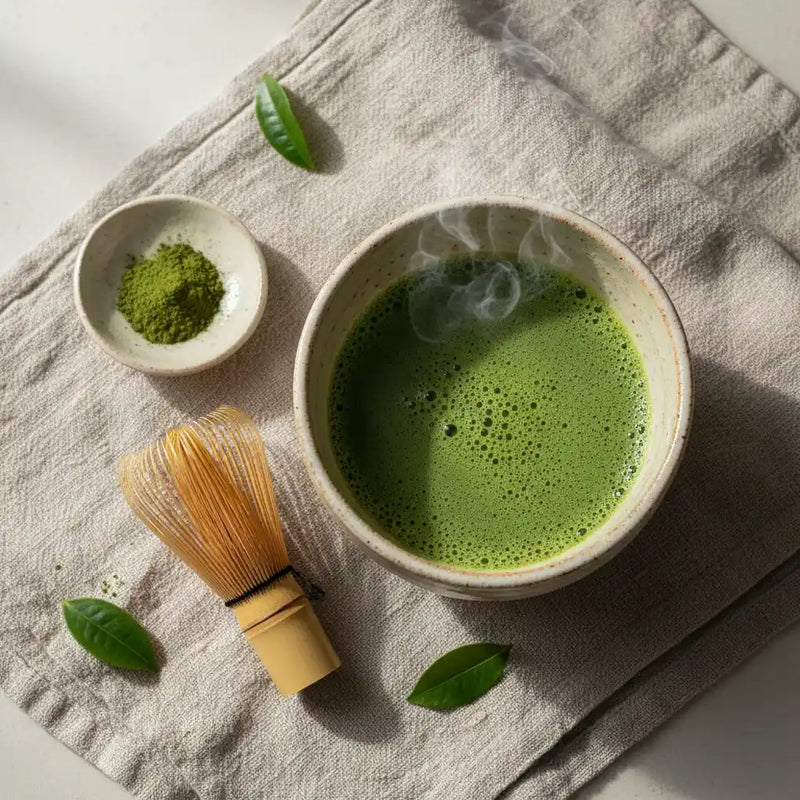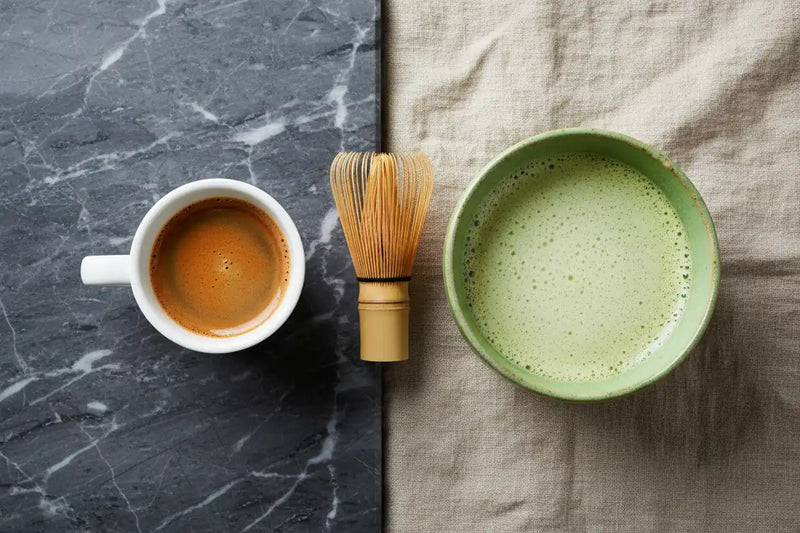


Common Matcha Mistakes that we keep hearing.
We get messages like this every week.
"My matcha tastes so bitter." "Why is mine always clumpy?" "I followed a recipe and it still tasted awful. Is matcha just not for me?"
And every time, our answer is the same: it's not you, and it's almost never the matcha. It's one or two small things in how it's being made.
We've been working with matcha long enough to know that the gap between a bad cup and a genuinely great one is surprisingly small. A few degrees difference in water temperature. Ten seconds of sifting. The direction you move your wrist when you whisk. These things sound minor until you taste the difference.
So here's everything we've learnt: the mistakes we see most often, and how to fix each one for good.
The Short Version (If You're in a Hurry)
|
Mistake |
What's Actually Happening |
How to Fix It |
|
Skipping the sift |
Static makes matcha clump — water can't break them up |
Sift through a fine-mesh sieve first |
|
Boiling water |
Heat burns the leaves, tannins go bitter |
Let it cool to 80°C before whisking |
|
Stirring in circles |
Not enough air = flat, heavy texture |
Whisk in a W or M motion, from the surface |
|
Off ratios |
Too much water or too little matcha |
1–2g matcha to 60ml water for traditional style |
|
Wrong grade |
Culinary matcha isn't made to drink straight |
Ceremonial grade for drinking, culinary for cooking |
|
Bad storage |
Light and air oxidise matcha fast |
Sealed, in the fridge, finished within 4–6 weeks |
Now let's go deeper on each one.
You're Not Sifting And It Shows
No one tells you this when you start. You open the tin, you spoon some into your bowl, you add water. And then you spend the next five minutes trying to whisk out clumps that aren't going anywhere.
Matcha powder is incredibly fine. That's what makes it so good but it's also why it clumps. Static electricity builds up during storage and the powder sticks to itself. Once those clumps meet water, they seal on the outside and you can't break them down no matter how aggressively you whisk.
Sifting is the fix. A small fine-mesh sieve, about 10 seconds of tapping, and your powder goes into the bowl light and airy and ready to mix. It's genuinely the single most impactful thing you can do for a smoother cup and once you start doing it, you'll never skip it again.
Your Water Is Too Hot (This Is Why It Tastes Bitter)
This one surprises people. Tea means hot water, right? But matcha isn't brewed like regular tea; you're whisking the whole leaf into the water and drinking all of it. So water temperature matters more here than with almost any other tea you'll make.
Boiling water 100°C scalds the matcha. It forces out excess tannins and catechins, and those compounds are what make it taste sharp and harsh. Good matcha should have some gentle bitterness, but it should sit underneath a smooth, almost sweet, umami-rich flavour. If what you're tasting is mostly bitterness and not much else, temperature is almost certainly why.
The sweet spot is 80°C. If you have a variable-temperature kettle, set it there. If you don't, bring your water to a boil and let it sit uncovered for 2–3 minutes. It'll drop to roughly the right temperature on its own.
Some really delicate ceremonial-grade matcha actually tastes best at a cooler 60°C. Our Premium Ceremonial Matcha falls into that category; it has a complexity that opens up more at lower temperatures. Worth experimenting with once you've got the basics sorted.
You're Stirring It. Matcha Needs Whisking.
A spoon doesn't work. A fork doesn't work. Slow circular motion doesn't work. We know people try these things and they'll get something that resembles matcha but not the real thing.
Proper whisking is what creates that signature frothy layer on top. And that froth isn't just aesthetic. It changes the texture of the whole drink, making it lighter and softer on the palate. Without it, matcha sits heavier and the bitterness is more pronounced. [^2]
What actually works is a bamboo whisk (chasen) moved in a rapid W or M motion, not circular, not stirring, a back-and-forth zigzag from one side of the bowl to the other. Keep your wrist loose. Work from the surface of the liquid rather than pressing down to the bottom. You should see the froth building within about 20–30 seconds.
If you don't have a chasen yet, a milk frother is the next best option. Or the shaker bottle method sifted matcha, water, sealed bottle, shake hard works surprisingly well for busy mornings.
Your Ratio Is Off
There's no single "correct" amount of matcha because a lot of it comes down to personal taste. But there is a reliable starting point, and most people are either using too much or too little.
For a traditional usucha (thin style matcha), start here:
½ to 1 teaspoon (1–2g) of matcha to 2 oz (60ml) of water
From that base, adjust. Want something lighter and more drinkable? Add more water. Making a matcha latte with milk? Use a bit more matcha so the flavour actually comes through milk is dense and it needs something to stand up to it.
If you're not measuring at all, start measuring. It sounds fussy but it genuinely matters, especially while you're still dialling in your taste.
You're Drinking Culinary-Grade Matcha Straight
Culinary-grade matcha is a different product made for a different purpose. It uses leaves from later in the harvest that have a stronger, more astringent character which is exactly what you want when you're baking matcha cookies or blending it into a smoothie where other flavours are competing.
On its own, with just water? It's going to taste harsh. That's not a flaw, it's just not what it's designed for.
For drinking, whether that's a traditional bowl or a simple latte you want ceremonial-grade matcha. It's made from younger leaves, shade-grown and stone-ground, with a flavour profile that's noticeably smoother and more nuanced. Our Premium Ceremonial Matcha is the first harvest, single cultivar, stone-ground in Kagoshima. It's what we'd put in front of someone who's never experienced matcha the way it's supposed to taste.
Use our Culinary Matcha for everything else. It's brilliant in baking and it's kinder on the wallet when you're using it by the spoonful.
You're Storing It Wrong and It's Going Stale
This one is sneaky because the matcha looks fine. It's still green, still smells like matcha. But something tastes off flatter, duller, less of everything that made it good when you first opened it.
Matcha oxidises. Light, heat, air, and moisture all accelerate that process. Left open on the bench or stored in a clear container near a window, your matcha starts degrading from the moment it's exposed. The bright green fades. The umami disappears. The bitterness sharpens.
The fix: keep it sealed, keep it in the fridge, and try to get through it within 4–6 weeks of opening. If you buy in bulk, leave the extra tins sealed and in a cool dark cupboard until you're ready for them. Writing the opening date on the tinit takes two seconds and saves you from that creeping doubt about whether your matcha is still good.
One Last Thing
If you've fixed all of the above and your matcha still isn't tasting right, the issue might simply be the quality of what you started with. Dull colour, a yellowish tinge, a smell that's more hay than fresh greens these are signs the matcha was already past its best before it reached you.
That's why sourcing matters. Our Premium Ceremonial Matcha is harvested fresh and shipped directly from Kagoshima because even the best preparation technique can't rescue a powder that wasn't good to begin with.
Get the fundamentals right, start with quality matcha, and a great cup is genuinely not that far away.