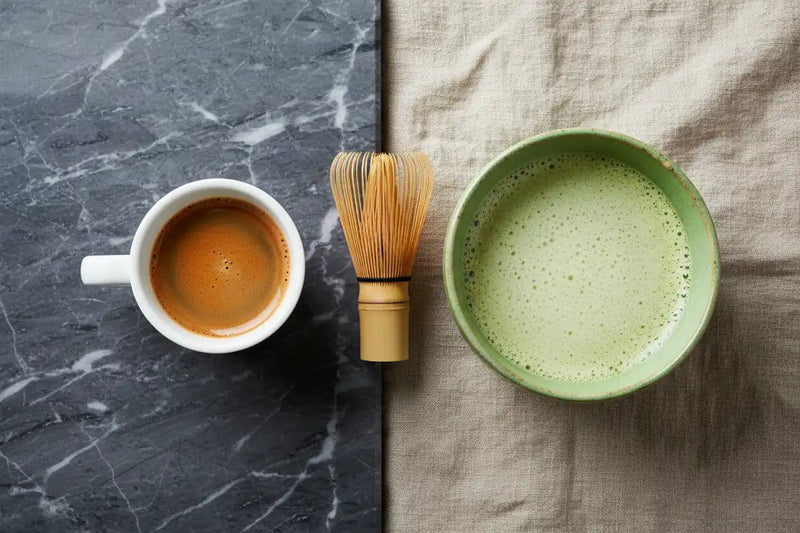
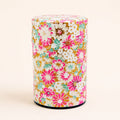


They're the two drinks people reach for when they want a break from coffee, and the matcha vs chai question usually gets framed around caffeine. But here's the thing most comparisons miss: the caffeine in the two is actually pretty close. The bigger difference, the one that changes how healthy your drink really is, is sugar. Matcha is a vivid green, antioxidant-rich tea you can easily keep unsweetened. Chai is a warm, spiced black tea that, in cafe form, usually arrives pre-sweetened. Here's the full comparison, so you can order the right one.
Quick answer
Matcha: whisked green tea powder. Vivid green, grassy and umami, high in antioxidants and L-theanine for calm focus, and easy to drink unsweetened.
Chai: spiced black tea with milk. Warm, cosy and comforting, with anti-inflammatory spices, but cafe versions are usually pre-sweetened.
The real difference: caffeine is similar; sugar is not. An unsweetened matcha latte is a real order, while a cafe chai is often 25 to 40g of sugar.
Key Facts: Matcha vs Chai
- Caffeine is close. A matcha serving runs roughly 60 to 80mg; a cafe chai latte around 30 to 70mg, often lower when made from concentrate.
- Sugar is the real split. Matcha powder is unsweetened, so you control it. A cafe chai latte is usually pre-sweetened, at 25 to 40g of sugar.
- Matcha wins on calm focus. It's far higher in L-theanine, the amino acid that pairs with caffeine for steady, jitter-free energy.
- Chai wins on warming spice. Its ginger, cinnamon, cardamom and cloves bring anti-inflammatory and digestive benefits matcha doesn't.
- Both are healthy unsweetened. The sugar added at the cafe is what usually makes the bigger difference, not the drink itself.
Matcha vs Chai: What's the Difference?
They come from different traditions and different plants-of-a-kind. Matcha is shade-grown green tea, stone-ground into a fine powder that you whisk whole into water or milk, so you drink the entire leaf. Chai, properly masala chai, is black tea brewed with warming spices like cardamom, cinnamon, ginger and cloves, then combined with milk and usually sweetened. One is a bright, vegetal green; the other a spiced, milky brown.
| Matcha | Chai | |
|---|---|---|
| Base | Powdered green tea leaf | Black tea + spices |
| Preparation | Whisked into water or milk | Brewed/steeped, then milk |
| Colour | Vivid green | Spiced milky brown |
| Flavour | Grassy, umami, creamy | Warm, spiced, sweet |
| Caffeine (per serve) | ~60–80mg | ~30–70mg |
| L-theanine | High (calm focus) | Low |
| Antioxidants | Very high (EGCG) | Black tea + spice antioxidants |
| Sugar (cafe default) | Easy to keep unsweetened | Often 25–40g, pre-sweetened |
| Best for | Focus, antioxidants, sugar control | Comfort, warming spice, digestion |
Caffeine: Matcha Usually Has a Little More
Despite its reputation as the gentler drink, matcha usually carries slightly more caffeine than a cafe chai. The reason is in the preparation: a matcha serving is a full 2g of powdered leaf that you consume entirely, while a cafe chai latte is a modest amount of brewed tea diluted with milk, often from a concentrate. That puts matcha around 60 to 80mg and chai around 30 to 70mg per serve. The gap isn't huge, and the bigger point is how the caffeine feels. Matcha's L-theanine smooths its caffeine into steady, calm energy, which our guide to matcha for focus explains in depth.
The Real Difference Is Sugar
This is the part worth ordering around. A cafe chai latte is almost always made from a sweetened concentrate or syrup, which means it arrives with 25 to 40g of sugar baked in, and you often can't ask for it unsweetened. A matcha latte starts from plain, unsweetened powder, so an unsweetened matcha latte is a completely normal order. If you're watching your sugar, that single difference matters more than any caffeine number. The same is true for calories: plain matcha is almost calorie-free, while the sugar and milk are what make either drink an indulgence, as our matcha latte calories guide breaks down.
Health and Antioxidants
Both are genuinely healthy drinks when they aren't drowned in sugar, they just help in different ways. Matcha is one of the richest everyday sources of antioxidants, led by EGCG, and it uniquely pairs caffeine with L-theanine for calm, focused energy, which is why it's a favourite for study, work and pre-workout. Chai's strength is its spices: ginger supports digestion and eases nausea, cinnamon is linked to steadier blood sugar, and cardamom and cloves add their own anti-inflammatory and antimicrobial benefits. So matcha leans toward focus, antioxidants and metabolism, while chai leans toward comfort, warmth and digestion. Neither is "unhealthy", the sugar added at the counter is the thing to watch.
Flavour and When to Drink Each
Flavour is where it gets personal. Matcha is fresh, grassy and vegetal with a creamy umami depth, a clean, green sort of drink that suits a focused morning or a midday reset. Chai is warm and aromatic, all cinnamon and ginger and cardamom, a cosy, comforting cup that shines on a cold afternoon or whenever you want something that feels like a treat. Many people drink matcha earlier in the day for its steady lift, and save chai for a slower, spiced moment.
Can You Combine Them?
You can, and it's lovely. A "matcha chai" or "dirty chai matcha" brings matcha's green, L-theanine-rich base together with chai's warming spices, giving you calm focus and cosy flavour in one cup. If you can't choose, that fusion is the best of both.
Which Should You Choose?
Choose matcha if you want the most antioxidants, calm and sustained focus, an easy way to keep sugar low, a pre-workout lift, or a clean green morning drink.
Choose chai if you want warming comfort, spiced flavour, digestive support from ginger and cinnamon, or a slightly lower-caffeine cup, just mind the sugar at cafes.
And if you love both, keep both. They cover different moods and moments, and a matcha chai gives you the best of each.
Where Iki Matcha fits
We're a matcha specialist, so if the bright, antioxidant-rich, low-sugar side of this comparison appeals, that's our world:
- Single-origin Kagoshima, first-harvest and shade-grown, high in the EGCG and L-theanine that set matcha apart.
- Smooth and naturally sweet, so you can keep it unsweetened and still enjoy it, which is where matcha genuinely beats a sugary cafe chai.
- Sourced from a JAS-certified organic farm, stone-ground and third-party lab tested, shipped same-day from Melbourne with free shipping over $69 and a 30-day money-back guarantee.
Bright, antioxidant-rich and as low-sugar as you want it.
Single-origin Kagoshima · first harvest · lab tested · ships same-day from Melbourne
Shop Ceremonial MatchaReferences
- Owen GN, et al. "The combined effects of L-theanine and caffeine on cognitive performance and mood." Nutritional Neuroscience, 2008. (L-theanine with caffeine supports calm, focused attention, the effect matcha is known for.) pubmed.ncbi.nlm.nih.gov/18681988
- Caffeine, L-theanine and sugar ranges for matcha and cafe chai are drawn from published beverage-composition and cafe nutrition data. Figures are typical ranges; exact values vary by recipe, strength and preparation.