

Here's the short answer, because it's the one most people get wrong: the matcha in a matcha latte is only about 6 calories. Everything else on the label is milk and sweetener. So a matcha latte's calories run anywhere from roughly 40 to 250, and its caffeine from about 60 to 140mg, and both come down to choices you control: which milk, how sweet, and how much matcha.
This is the full breakdown, by milk, by size, and by cafe, plus why "healthy green drink" isn't automatic, and a simple home recipe that lands lighter and costs a fraction of the $6 to $8.50 you'll pay at the counter.
Key Facts: Matcha Latte Calories & Caffeine
- The matcha is ~6 calories. Pure matcha powder is about 3 calories per gram, so a 2g serve barely registers. The milk is the calorie story.[1]
- Milk decides everything. The same matcha lands at ~40 calories with unsweetened almond milk or ~155 with whole dairy. Barista oat runs high because of added oil.[1][2]
- Caffeine follows the matcha, not the cup size. One teaspoon (2g) gives ~65–70mg; two teaspoons (4g) around 130–140mg. Bigger cafe sizes just use more scoops.[3]
- It's roughly half a coffee latte. A large matcha latte sits near 65–80mg of caffeine, versus about 150mg for a coffee latte and 300mg-plus for brewed coffee.[3]
- "Green" doesn't mean low-calorie. An oat-milk latte with syrup can top 200 calories. The drink is only as light as what you put in it.[2]
How Many Calories Are in a Matcha Latte?
A matcha latte is a small amount of matcha (usually 1–2g, about 3–6 calories) whisked with water, then topped with roughly 240ml of milk, plus any sweetener. So the calorie count is basically the milk's calorie count plus whatever you sweeten it with. Change the milk, change the drink.
| Milk (≈240ml, unsweetened) | Approx. calories in the latte |
|---|---|
| Almond milk (unsweetened) | ~40–70 |
| Skim dairy milk | ~85 |
| Soy milk | ~90–110 |
| 2% dairy milk | ~120–150 |
| Oat milk (barista blend) | ~120–170 |
| Whole dairy milk | ~150–155 |
Then there's the sweetener, which is where a lot of "healthy" lattes quietly balloon. A single flavoured syrup pump adds around 20 calories; a tablespoon of honey adds about 64. A couple of pumps of vanilla in an oat latte can push it past 200 calories on its own.[1][2]
Matcha Latte Calories by Cafe Size
Cafe drinks run higher than homemade, because the cups are bigger and the sweetener is often built in. As a rough guide: a small (8–10oz) lands around 120–200 calories, a medium (12–14oz) around 180–300, and a large (16–20oz) anywhere from 240 to 400-plus with full-fat milk and syrup.[2]
One thing worth knowing if you order out: some chains use a pre-sweetened matcha blend, so the sugar is baked in and you can't simply ask for it unsweetened. A large cafe matcha latte with a sweetened blend can carry 30g of sugar or more. Asking for fewer scoops, a smaller size, or a lighter milk is the easiest way to bring both the calories and the sugar down.[2][4]
How Much Caffeine Is in a Matcha Latte?
Caffeine tracks the amount of matcha, not the size of the cup. A standard 1 teaspoon (2g) of matcha carries roughly 65–70mg of caffeine, and 2 teaspoons (4g) about 130–140mg. When a cafe sells you a bigger size, it's usually adding scoops, which is what lifts the caffeine, not the extra milk.[3]
| Serving | Matcha used | Approx. caffeine |
|---|---|---|
| Home latte, small | 1 tsp (2g) | ~65–70mg |
| Home latte, large | 2 tsp (4g) | ~130–140mg |
| Cafe small / tall (12oz) | ~2 scoops | ~40–55mg |
| Cafe large / grande (16oz) | ~3 scoops | ~65–80mg |
| Cafe XL / venti (20–24oz) | ~4 scoops | ~85–110mg |
Cafe figures based on standardised scoop portions; brands vary.[3]
Matcha Latte vs Coffee: The Caffeine Difference
If you're switching from coffee, the drop is bigger than most people expect. A large matcha latte sits around 65–80mg of caffeine. A coffee latte the same size is closer to 150mg, and a brewed coffee can push past 300mg.[3] So a matcha latte gives you roughly half a coffee latte's caffeine, paired with L-theanine for a steadier, jitter-free lift. We break the two down properly in matcha vs coffee, and if calm energy is your goal, our guide to matcha and cortisol goes deeper.
Is a Matcha Latte Actually Healthy?
It can be, and it can also be a dessert in a cup. The matcha itself brings antioxidants (catechins like EGCG) and L-theanine for calm focus, all for almost no calories. Whether the finished latte is a light, nutritious drink or a 250-calorie treat depends entirely on the milk and sweetener. An unsweetened almond-milk matcha latte is genuinely light at around 40–70 calories. The same matcha in barista oat with two pumps of vanilla is a very different drink. The green colour tells you nothing about the calorie count.
How to Make a Lighter Matcha Latte at Home
Making it yourself gives you control over every one of those variables, and at $6 to $8.50 a cup out, it pays for itself fast, which matters more than ever during the 2026 matcha shortage.
Everyday Matcha Latte (hot or iced)
Makes 1 · about 80–120 calories with unsweetened plant milk
- 1–2 tsp matcha (culinary or ceremonial), sifted
- 60ml hot water, around 80°C (not boiling)
- 200ml milk of choice
- Optional: a little honey, maple or vanilla to taste
- Sift the matcha into a bowl or cup to avoid clumps.
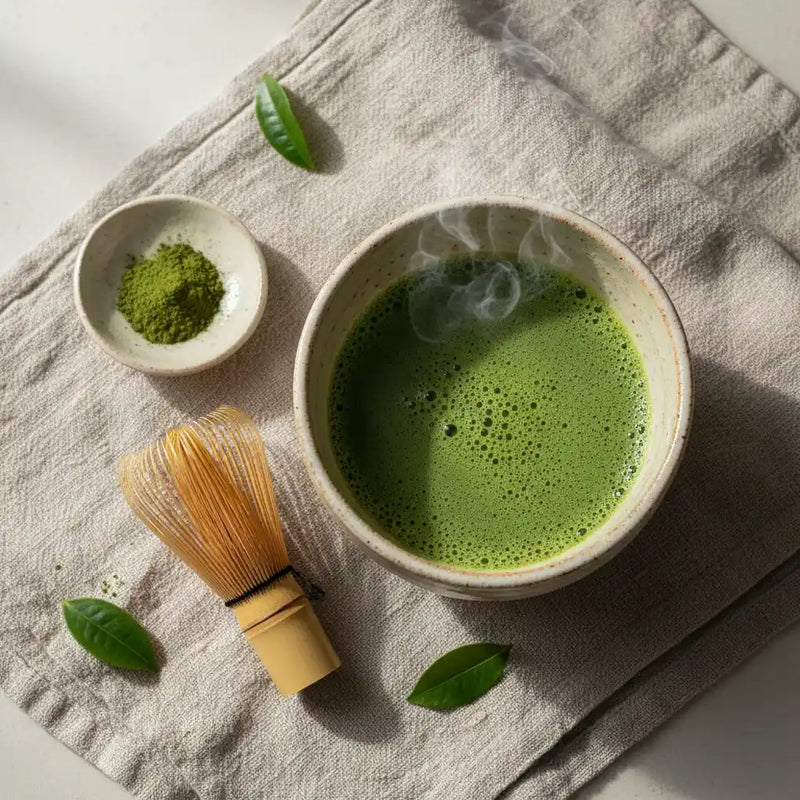
- Add the hot water and whisk in a brisk zig-zag (a bamboo whisk or an electric frother) until smooth and frothy.
- Warm or froth your milk. Pour it over the matcha. For iced, pour over ice and top with cold milk.
- Sweeten only if you want to. Taste first, most good matcha needs very little.
For lattes, a good culinary grade holds its flavour through milk beautifully and keeps the cost down, while a ceremonial grade gives a smoother, sweeter cup if you prefer it richer. New to whisking? Our how to make matcha guide walks through a lump-free bowl.
Single-origin Kagoshima matcha, whisks and kits, shipped same-day from Melbourne. Make the cafe drink at home for a fraction of the price.
Shop Matcha & KitsReferences
- Matcha powder nutrition (about 3 calories per gram) and milk as the main calorie contributor: standard nutrition data (USDA FoodData Central) and published milk nutrition panels.
- Matcha latte caffeine per serving (about 64–70mg per 2g) and the coffee comparison figures: Caffeine Informer database.
- Cafe matcha latte calories, sugar and caffeine by size: Starbucks published nutrition information.