

Quick answer
Usucha (thin tea): about 2g of matcha whisked with 60 to 80ml of water into a light, frothy bowl. The everyday preparation most people know.
Koicha (thick tea): about 4g of matcha kneaded into just 30 to 40ml of water, making a thick, glossy, un-frothed paste. Concentrated, ceremonial, and it demands the highest-grade matcha.
Key Facts: Usucha vs Koicha
- Same leaf, different ratio. Koicha uses roughly double the matcha and half the water of usucha, making it four to five times more concentrated.
- Whisk vs knead. Usucha is whisked briskly to a fine foam; koicha is folded slowly into a smooth, glossy paste with no froth.
- Koicha needs top-grade matcha. With no foam to soften it and everything concentrated, any bitterness is fully exposed, so only the finest ceremonial grade works.
- Different roles. Usucha is the casual, everyday bowl; koicha is the formal centrepiece of the traditional tea ceremony.
- Koicha hits harder. More matcha per serve means more caffeine and a far more intense flavour.
What's the Difference Between Usucha and Koicha?
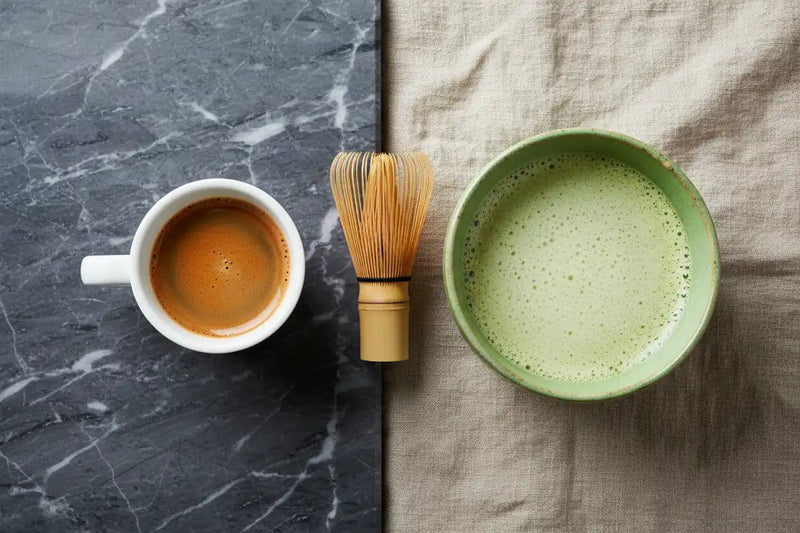
The two styles come down to three things: ratio, technique and the grade of matcha they demand. Usucha, written 薄茶 and meaning "thin tea," is the light, frothy bowl most of us picture when we think of matcha. Koicha, 濃茶 or "thick tea," is its intense opposite: a concentrated, almost syrupy preparation that you sip slowly. Here's how they line up.
| Usucha (thin) | Koicha (thick) | |
|---|---|---|
| Matcha | ~2g (1 tsp) | ~4g (2 tsp) |
| Water | 60–80ml | 30–40ml |
| Concentration | Light | 4–5x stronger |
| Technique | Whisk briskly to a froth | Fold/knead slowly, no froth |
| Texture | Light, frothy | Thick, glossy, honey-like |
| Grade needed | Good ceremonial grade | Highest ceremonial grade only |
| Caffeine | Moderate | Higher (more matcha) |
| Role | Everyday, casual | Formal tea ceremony centrepiece |
What Is Usucha (Thin Tea)?
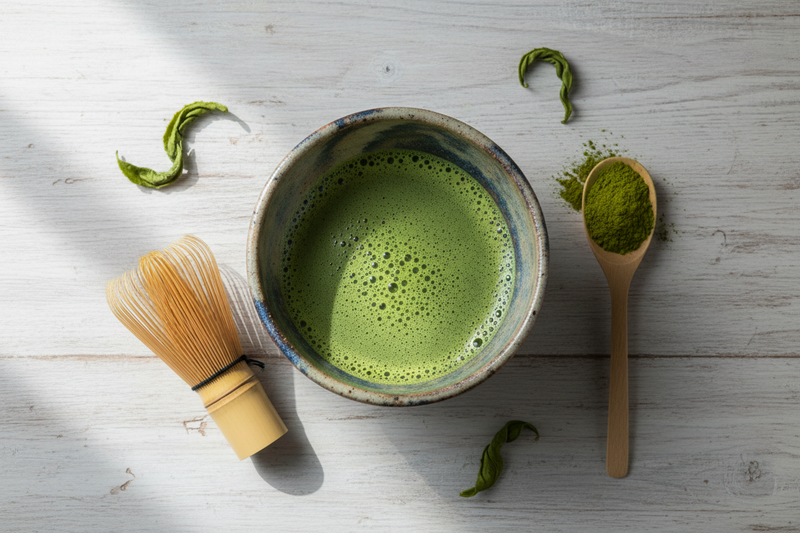
Usucha is the preparation you already know. Around 2g of sifted matcha, 60 to 80ml of hot water at about 80°C, and a brisk whisk until a fine, even foam forms on top. The result is light, smooth and easy to drink, with matcha's grassy-sweet flavour on gentle display. It's the everyday bowl, the one beginners start with, and the base for a matcha latte once you add milk. Forgiving, quick and endlessly repeatable.
What Is Koicha (Thick Tea)?
Koicha is another world. You use about double the matcha, roughly 4g, with only 30 to 40ml of water, and instead of whisking for foam you fold the powder slowly into the water until it turns into a smooth, glossy paste with the consistency of warm honey. There's no froth at all. The flavour is deep, rich and intensely umami, and a little goes a long way. In the formal Japanese tea ceremony, koicha is the main event, the serious, meditative heart of the ritual, with usucha often served afterwards as the lighter close. One tea master described koicha as feeling ten times more intense than its four-times concentration would suggest.
Why Koicha Needs the Highest-Grade Matcha
This is the part that matters most if you want to try it. Because koicha concentrates everything in the leaf and has no foam to soften the taste, it exposes and amplifies any bitterness or astringency. A mediocre matcha that tastes fine as a frothy usucha becomes harsh and unpleasant as koicha. That's why koicha traditionally calls for the finest first-harvest, shade-grown, stone-ground ceremonial matcha, rich in the amino acids that bring natural sweetness. Put simply, usucha can carry a good matcha, but koicha will only ever taste as good as the very best matcha you can give it. If you want to understand grades first, our guide to ceremonial vs culinary matcha is the place to start.
How to Make Usucha (Thin Tea)
Usucha, step by step
- Sift about 2g (1 teaspoon) of matcha into a bowl to remove lumps.
- Add 60 to 80ml of hot water at around 80°C (not boiling).
- Whisk briskly in a light "W" or "M" motion for 15 to 20 seconds, until a fine, even foam forms.
- Drink straight away, while the froth is fresh.
How to Make Koicha (Thick Tea)
Koicha, step by step
- Sift about 4g (2 teaspoons) of your best ceremonial matcha into a warmed bowl.
- Add just 30 to 40ml of hot water at around 80°C, pouring a little at first.
- Fold and press slowly with the whisk, no brisk whisking, working it into a smooth, glossy paste with no foam. Add the remaining water gradually to loosen it to a honey-like consistency.
- Sip slowly, it's rich and concentrated, so a small bowl is the whole experience.
For the full basics of whisking, water temperature and tools, see our how to make matcha guide, and the right whisk and bowl make both styles far easier.
Which Should You Try?
If you're newer to matcha, start with usucha. It's forgiving, quick, and it's the base for everything from a plain bowl to a latte. Once you have a genuinely high-grade ceremonial matcha and you're curious about the traditional experience, koicha is worth trying at least once, it's a different, more meditative way to taste matcha, and it reveals just how good your powder really is. Many people keep usucha as their daily ritual and save koicha for a slow weekend moment.
Where Iki Matcha fits
Both styles live and die by the quality of the powder, and koicha especially:
- Single-origin Kagoshima, first-harvest and shade-grown, smooth and naturally sweet, which is exactly what koicha needs and what makes usucha a pleasure.
- Stone-ground to a fine, even powder, so it folds into a glossy koicha and whisks into a clean usucha froth.
- Sourced from a JAS-certified organic farm, third-party lab tested, shipped same-day from Melbourne with free shipping over $50 and a 30-day money-back guarantee.
Smooth enough for a daily usucha, good enough for koicha.
Single-origin Kagoshima · first harvest · stone-ground · ships same-day from Melbourne
Shop Ceremonial MatchaReferences
- Usucha and koicha ratios, techniques and grade requirements are drawn from traditional Japanese tea-preparation references and tea-ceremony practice. Ratios are typical starting points; adjust to taste and to your matcha.