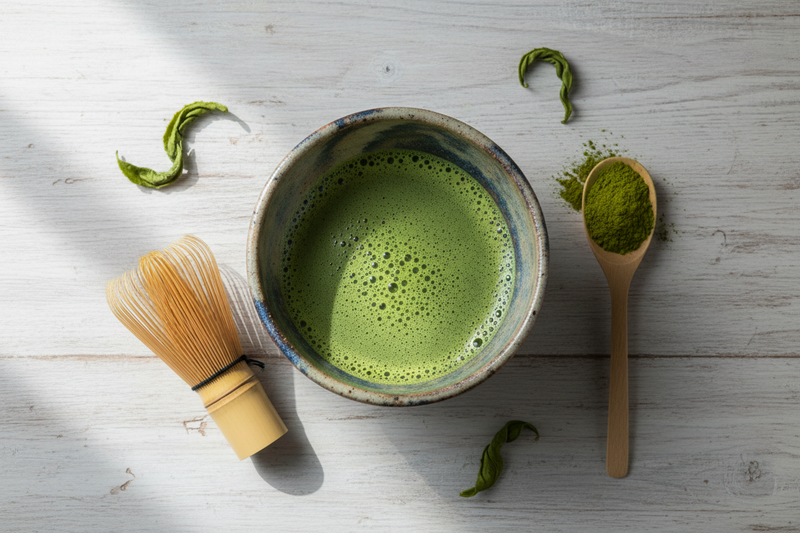
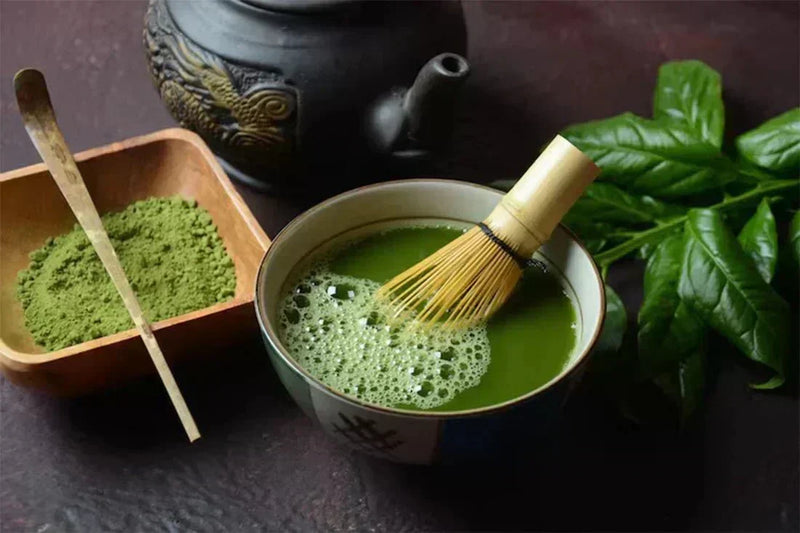
The honest answer to what does matcha taste like: grassy, naturally sweet, and deeply savoury, what the Japanese call umami. When it's good quality and made properly, matcha taste is smooth...
Matcha vs Green Tea: Same Plant, Completely Different Drink So, what is matcha green tea made of, and how is it different from the green tea in your cup? Both come...
Yes, matcha contains caffeine: roughly 60–70 mg per standard 2 g serve (about 1 teaspoon), or 30–35 mg per gram of powder. That puts one bowl of matcha at about half the caffeine of a drip coffee and a touch above a single espresso shot's effect spread over a longer curve. The reason matcha feels so different from coffee is L-theanine, an amino acid concentrated by shade-growing, which research shows smooths caffeine's absorption into steady, calm alertness rather than a spike and crash. The exact amount in your cup depends entirely on how much powder you use — so here's the full breakdown by teaspoon and by gram.
Matcha benefits come from one simple difference: you drink the whole tea leaf. Matcha is shade-grown green tea that's stone-ground into a fine powder and whisked into water, so you...
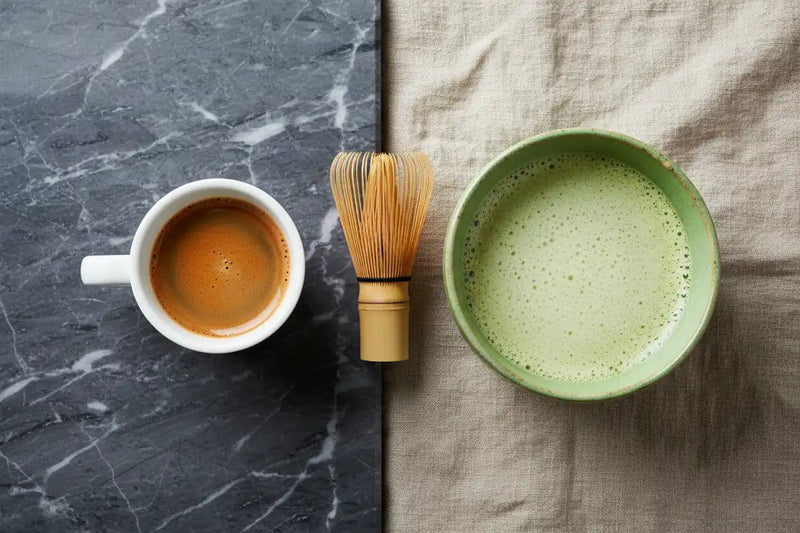
Matcha vs Coffee: Which is Actually Better for Energy? ▶ Key Facts Matcha vs coffee caffeine: Matcha (2g) has ~60mg caffeine. A drip coffee has ~95mg. An espresso shot has...
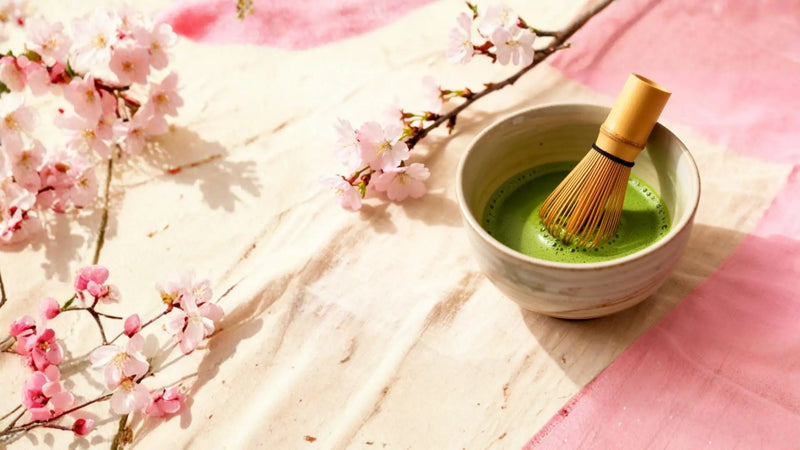
To define matcha simply: it's a finely stone-ground powder made from shade-grown Japanese green tea leaves (tencha). Unlike regular green tea, you whisk the powder into water and drink the...
Matcha may support modest weight loss through two mechanisms: EGCG (epigallocatechin gallate) inhibits fat absorption and increases fat oxidation during exercise, while caffeine provides a mild thermogenic effect. Studies show...
Matcha contains high concentrations of EGCG (epigallocatechin gallate), a polyphenol antioxidant with documented effects on skin and hair health. For skin: EGCG has demonstrated anti-inflammatory effects on acne-related inflammation in...
Japanese matcha is matcha that's actually from Japan — grown, shaded, harvested, and stone-ground there. That sounds obvious, but it's a distinction worth making. A growing share of the "matcha"...
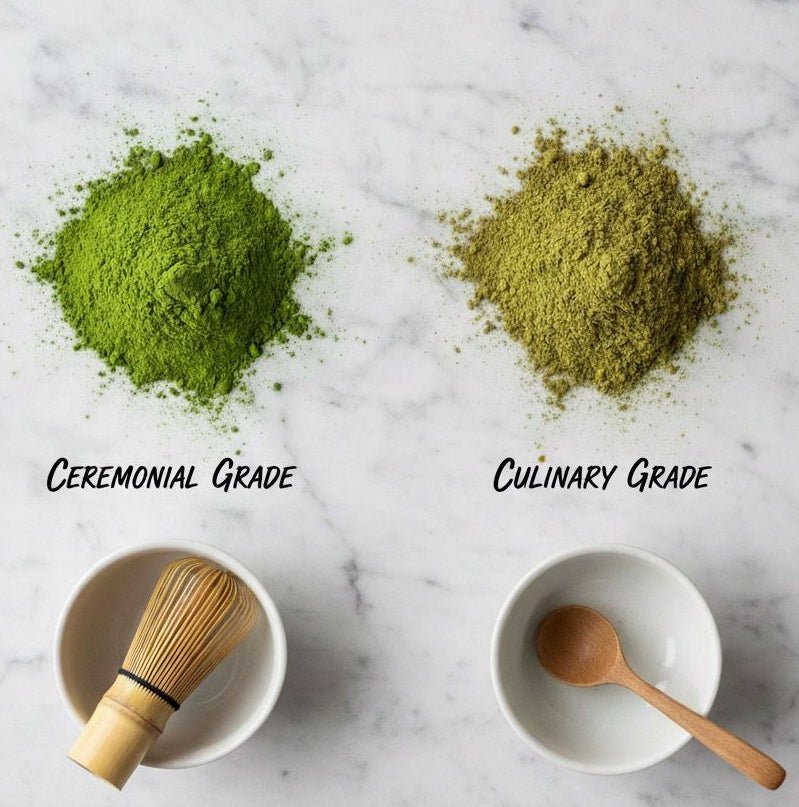
The Verdict: If you plan to drink your matcha straight, invest in a quality ceremonial grade. You'll be rewarded with an unparalleled flavour experience. For everything else, a good culinary grade will serve you perfectly and be much kinder to your wallet.
Your Complete 2026 Buyer's Guide Australia has one of the most enthusiastic and discerning matcha cultures outside Japan. We drink more matcha per capita than almost any country in...
Matcha for Beginners: Your Complete Guide to Getting Started If you've found yourself standing in a cafe staring at the menu, wondering "what actually is matcha?", you're in good company....
Single-origin ceremonial matcha from one JAS-certified family farm in Kagoshima, Japan. First harvest only, stone-ground, and independently lab-tested, packed and shipped by hand from St Kilda East, Melbourne.
Payment methods
iki Matcha Co St Kilda East, Victoria, Australia - 3183 Email: hello@ikimatcha.com.au
Operated by Techbridge Services Pty Ltd. ABN : 346 742 09931
"We acknowledge the Traditional Owners of the land on which we meet today, the Wurundjeri Woi-wurrung and Bunurong people of the Kulin Nation. We pay our respects to their Elders, past, present, and emerging, and extend that respect to all Aboriginal and Torres Strait Islander peoples."